
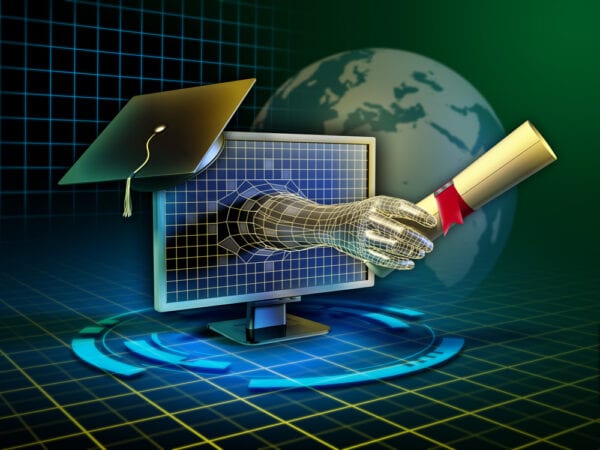
Today, universities and colleges introduce new courses every few years. This has given the students, the opportunity to learn everything they want to and make a career out of fit. It has given them the freedom to choose what they want and follow their passion rather than going for the conventional courses and degrees.
There were days when people willing to learn would not get the chance to get educated for many reasons. Some of these reasons were proximity of the college, non-availability of courses and degrees, and high fees, among many other reasons. But with the introduction of distance education, learning has just got easier. Distance education has helped the people who have the zeal to learn but no opportunity. People who commonly opt for distance education are the ones with jobs, housewives who cannot take out time to attend normal educational institutes, people living in far off places or in places without educational institutes offering the course of their choice, or people with physical disabilities.
Evolution of distance education
If you think that distance education has evolved recently, you are wrong. The history of distance education can be traced back to the 19th century. Distance learning began in United States of America and Europe in the middle of the 19th century.
Isaac Pitman, an Englishman is said to be the pioneer of distance learning. He began one of the first correspondence courses. Of course those days there was no internet or computer so postal service was used to send and receive the study material. The students would send in the instructed copies which would be then graded.
In the United States of America, a more refined way of distance education came out in 1874. The first university to offer it was Illinois Wesleyan University. By 1990, the program became popular and the universities and colleges offering distance learning courses started getting accredited.
The media too played an important role in allowing people to study from home. Educational radio and television enabled communication at a much greater level. This innovation in technology helped in broadcasting educational programs to large number of learners. It made education available beyond the conventional educational institutes.
What distance education offers today?
These days, with the use of the internet, computer, iPads, and smartphones distance education is readily available and easily accessible. Teachers and students can communicate better which strengthens the whole concept of distance learning. File sharing, video conferencing, and emails have simplified the process and made it less time consuming.
Virtual schools and universities offer many on-line courses and are getting very popular among students. Students prefer distance education because it gives them the flexibility to study whenever they want to. Many students these days work while they study. In such cases it may be difficult for them to attend college as well as work. Virtual colleges and universities, which are a form of distance education, make a good option for them to earn as well as learn.
Technological innovations have helped distance education in spreading itself. With further technological upgrading, newer and better distance education options may come up.